- Home
- About UTS
- Admissions
- The UTS Difference
- Support UTS
- UTS Community
- Stories
- Contact
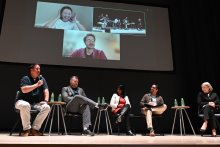
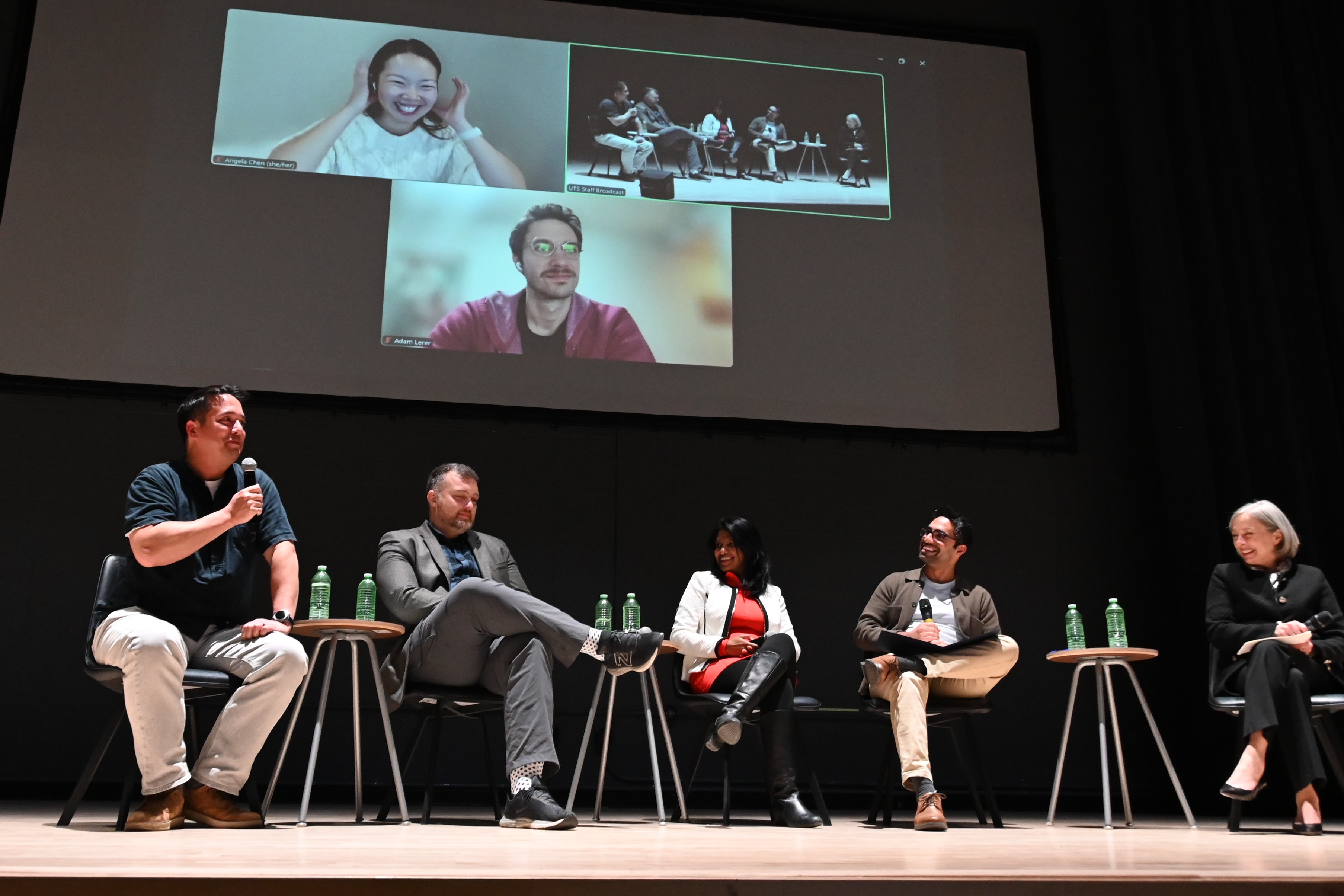
Inherently human skills such as complex problem-solving, collaboration, adaptability and emotional and ethical intelligence will serve students well in their careers during the age of artificial intelligence, said panelists at Artificial Intelligence at UTS and Beyond, held by the UTS Parents’ Association (UTSPA) at their General Meeting in the Withrow Auditorium in November 2025.
From how students can think critically in the AI era to their future in the workplace to risks of AI, the panel touched on questions that are top of mind in our parent and school community as AI becomes increasingly prevalent in society.
“The closer people are to their intrinsic motivations [in their career], the more likely they are to … be doing things that are complemented by AI,“ said UTS alum Adam Lerer ’05, a member of the technical staff at OpenAI, speaking virtually from San Francisco. “One really interesting recommendation I heard is to find the thing that you really believe in, and do that, even if no one else does… It might feel unsafe. But I think those directions are going to be the most advantageous in the AI era.’
Adam was one of five panelists from the UTS alumni and parent communities ‒ all leaders on the forefront of AI in the workplace and education ‒ who took part in the hybrid conversation led by UTS Principal Dr. Leanne Foster and UTS Director of AI Integration Adnan Zuberi.
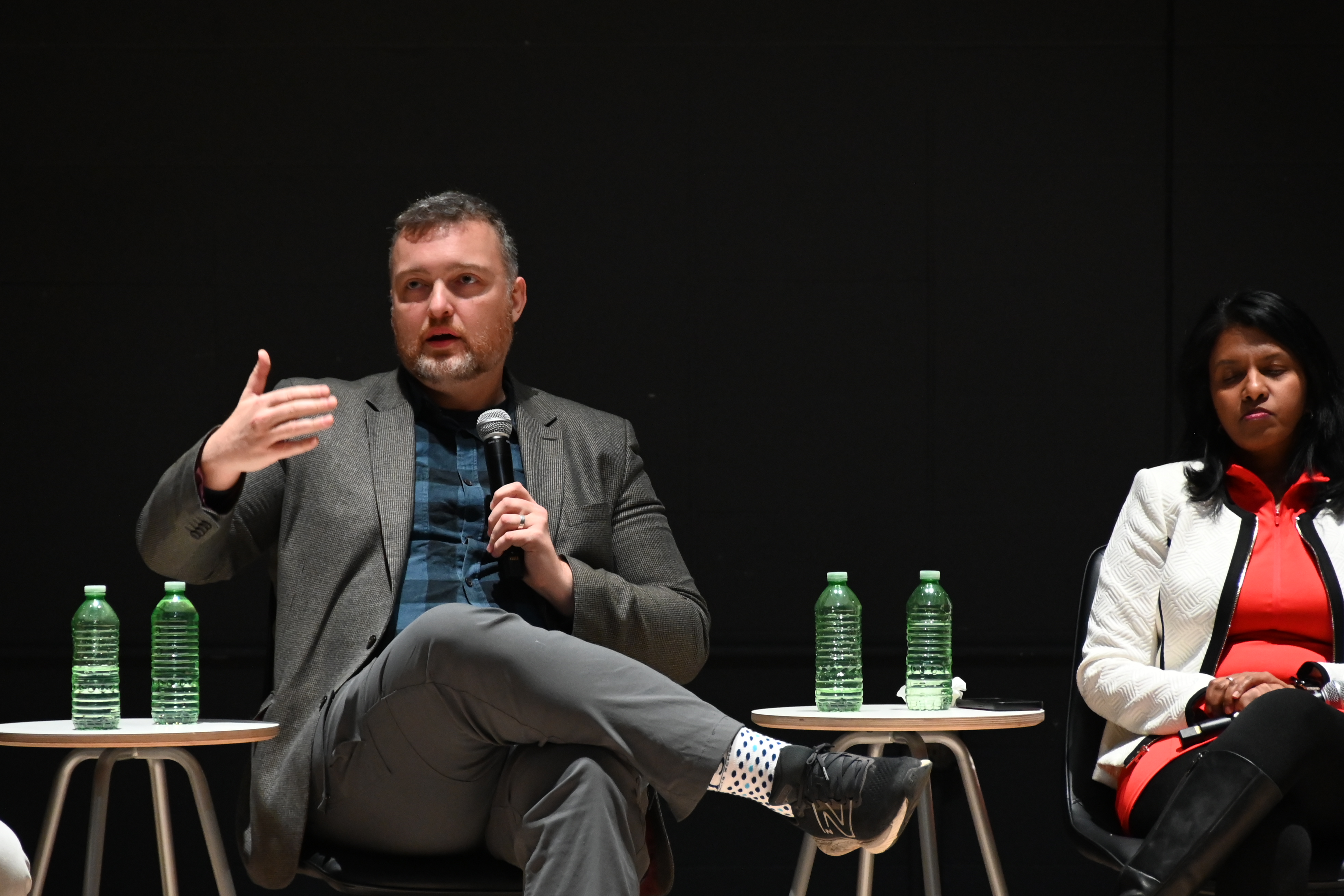
Dr. Luke Stark ’02 and Lakshmi Baskaran P ’31
Artificial intelligence can serve as a “force-multiplier” for students, said UTS alum Angela Chen ’13, a Stanford University entrepreneurship instructor and edtech founder.
“The critical conversation to be having with your children is more about cognitive partnerships…” she said. “If you are thinking well and your foundation is strong, AI can help create exponential output. But if your foundation is weak, then it's making your arguments even more like logical fallacy. So, you want to be teaching your pre-teen or teen about how to amplify their thinking, and you want to help your child articulate why they're reaching for AI rather than doing it themselves, so they become a more sophisticated user, rather than dependent.”
With a background as a historian, complemented by philosophy, political science and law, Dr. Luke Stark ’02 researches the ethical, historical and social impact of computational technology, including artificial intelligence systems, and is a 2024-2026 global scholar with the Canadian Institute for Advanced Research. As an assistant professor at Western University in the Faculty of Information and Media Studies who teaches undergraduate students, he is skeptical of the benefits of students using AI in their education.
“It’s not clear to me that you can develop those higher-order learning skills if you offload even a portion of ‘grunt work’ to these technologies…” Luke told the panel. “I think that we are very much still in the moment of should we be using these tools and, certainly, should we be using them in all contexts?”
With the rapid rate of change, he points out there is little empirical research about how AI tools are being used and how they are affecting students, adding that, “These tools have been designed to be enthralling.”
Steve Engels ’94, a professor at the University of Toronto department of computer science, whose department holds an internship partnership with UTS IT Services to develop artificial intelligence and software that improves the efficacy of our school, spoke about how the methods universities use to assess students will be changing in the AI era. “We have to figure out: what is it that we're doing now when we have no idea whether the person who submitted an essay actually wrote it? Then we’re thinking, is the whole idea about writing, or is it about being able to express ideas about how you can put an argument together? Is writing what we need, or can we find some other way of trying to assess? That's really hard for us.”
AI can be a great equalizer, he notes. Some students use AI to make their assignments easier to understand. Anyone online can access free tools like ChatGPT, which makes knowledge more democratized. But when students use it as an assistant, it’s hard to know when they are going too far. “We have this boundary, where on one side of it, AI helps people learn what they need,” Steve said, “helping overcome the challenges that get in the way of their learning… But when they use it as a substitute for learning, that's when we have problems.”
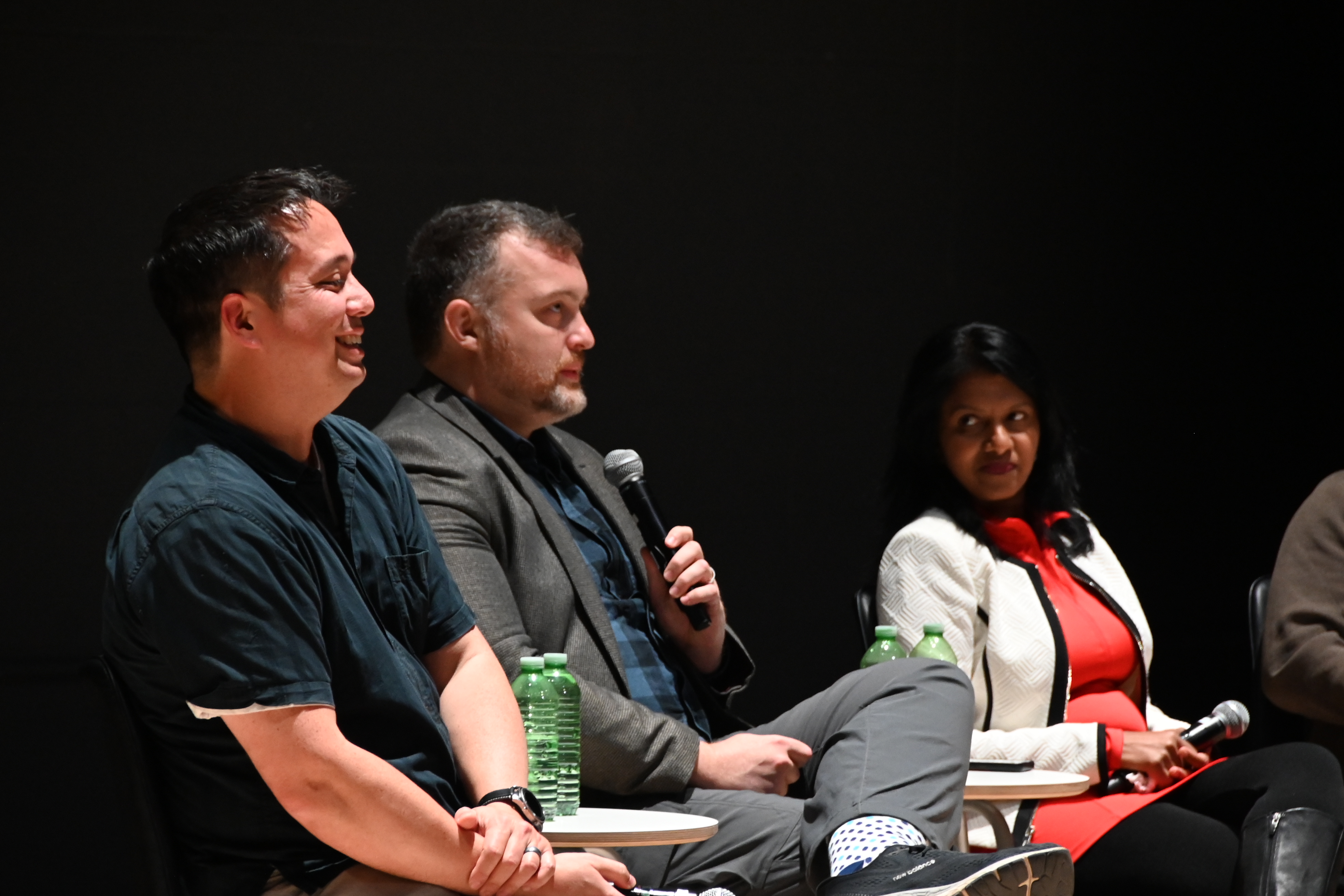
Steve Engels ’94, Dr. Luke Stark ’02 and Lakshmi Baskaran P ’31
Looking at the workforce, Lakshmi Baskaran P ’31, senior director of engineering at Microsoft, said no one knows what AI is going to mean in 10 years. With the constant evolution of technology, she said adaptability has become a key skill in employees. For parents who are wondering if studying engineering or computer science is the right thing for their children in the AI era, she advised: “Let your kids follow their passion. Today, it's AI. Tomorrow, it's a different technology. Passion is the one thing that doesn't die.” Engineering is fundamentally about problem-solving and people are still needed as AI cannot do what is not yet found or discovered, she said. Young minds will still be needed to solve these problems.
At UTS, the school is investing in AI integration in the classroom, drawing upon best practices from the latest research on constructive use of AI, with the aim of enhancing learning, engagement and achievement for our students, said Adnan Zuberi, UTS director of AI integration. In addition to work inside the classroom, more than 50 students have joined the school’s AI Talent Network, where participants are exploring technologies such as coding their own machine learning and deep learning apps and using neural networks, while collaborating with university researchers and publishing work at university conferences. They’re also researching how their peers use AI and its impact on them.
As UTS evolves along with AI, our school’s Strategic Plan serves as our North Star, ensuring our approach aligns with our school’s goals, said UTS Principal Dr. Leanne Foster. “We're thinking about how to ignite the brightest minds as outlined in our mission,” said Principal Dr. Leanne Foster, “by developing the critical thinking skills and encouraging students to be ethical decision-makers and problem solvers. Our values are one thing that we can’t offload to AI.”
One of the challenges with AI and the Internet in general, said Adam, is how we imagine it will usher in a golden age where we are much more productive. “But the Internet is balanced out by all these negative consequences with the ways people use it, like the inability to attend deeply and think deeply about things… AI is going to be an even more powerful technology that does the same thing. Our attention and ability to use our minds the way we want can be more powerfully hacked by companies that are trying to exploit that attention in various ways.”
When asked about the positive changes AI might bring in the next five to 10 years, Lakshmi said accessible education is a huge opportunity. “We are so fortunate to be sitting in this huge auditorium at UTS. Education is not equally accessible to many people in the world, and I think AI will open doors for it. And the young and bright minds here at our school could leverage AI to make education more accessible to the world population, where it is not so easily available.”