- Home
- About UTS
- Admissions
- The UTS Difference
- Support UTS
- UTS Community
- Stories
- Contact
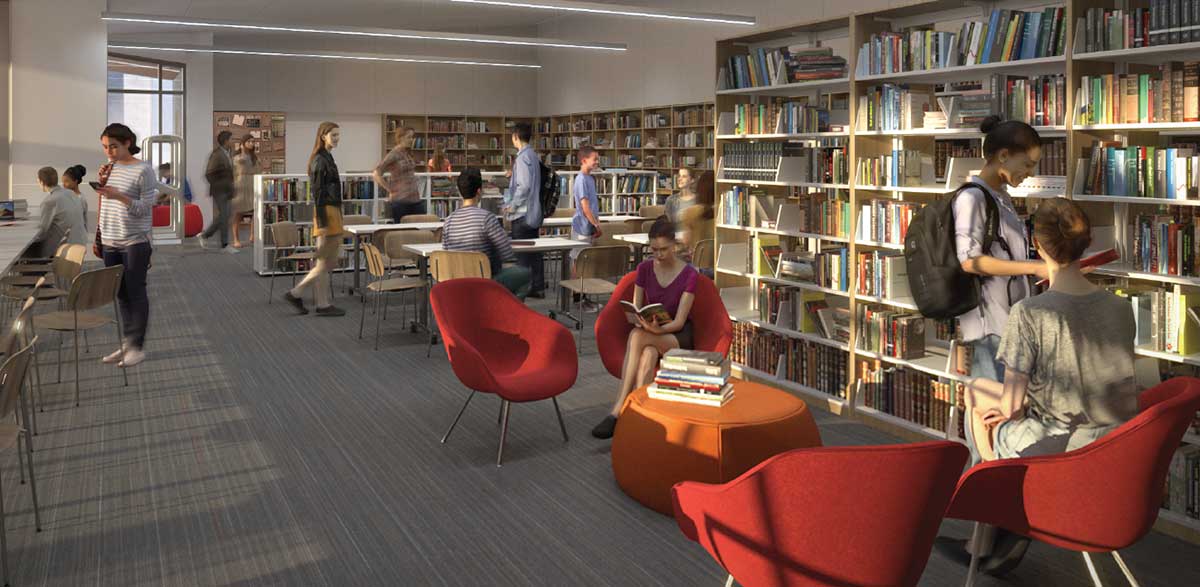
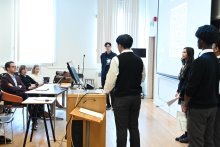
High school students created innovative solutions to the world’s water woes at the 17th annual Global Ideas Institute Final Symposium – from solar-powered ATMs in Chiapas, Mexico to an integrated phytoremediation wetland system in Anuradhapura, Sri Lanka that uses plants to naturally clean water to a water treatment skills apprenticeship for Ontario’s Indigenous youth.
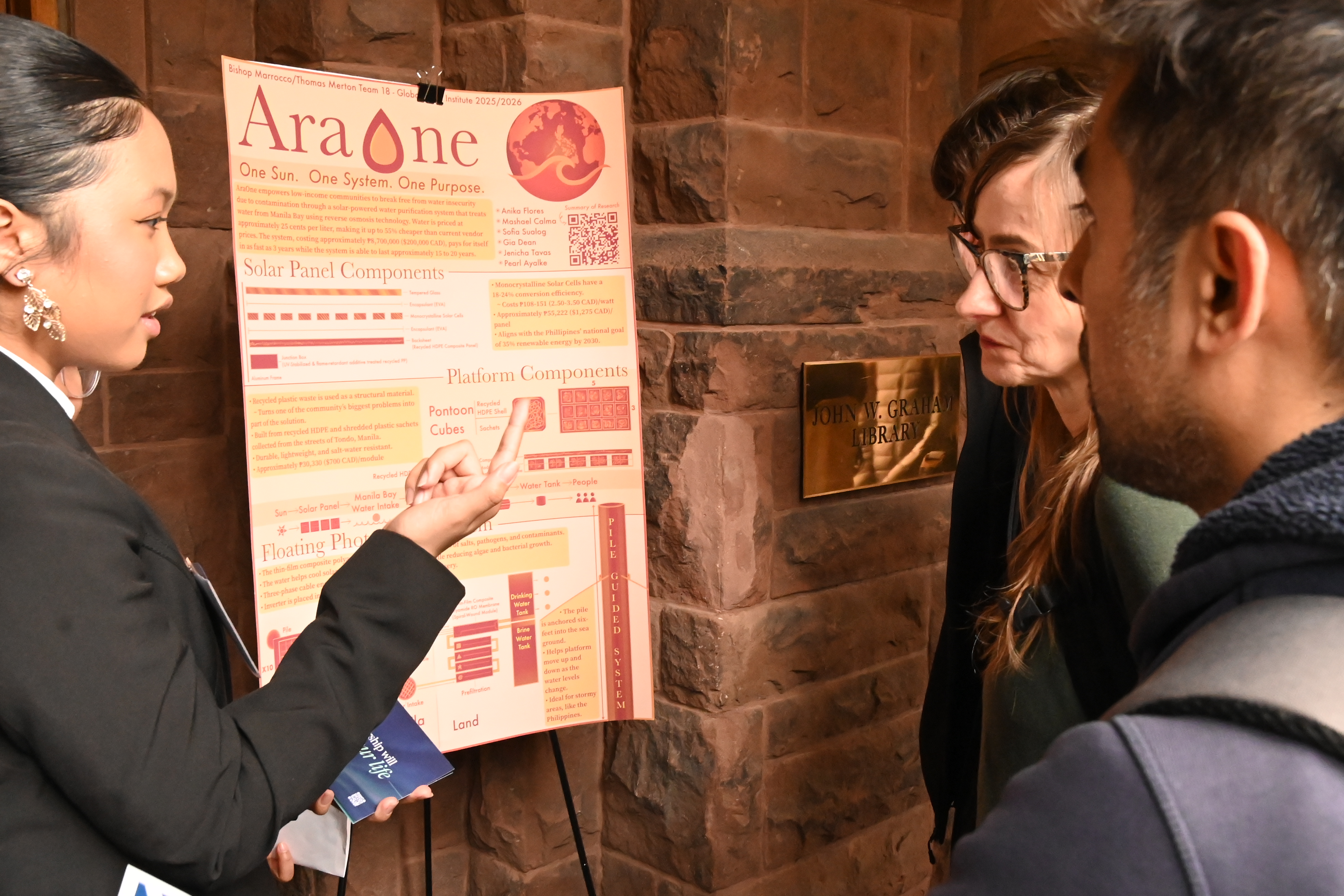
Along with pitch sessions, students also shared their ideas at a noon-hour poster session at the Munk School of Global Affairs and Public Policy.
With more than 2.1 billion people in the world lacking access to safe drinking water, 37 teams of students addressed the challenge: “How can we develop simple, low-cost solutions to improve access to safe drinking water in communities where it is currently unavailable?”
A program of the Munk School of Global Affairs and Public Policy in partnership with UTS, the 2025-26 Global Ideas Institute began in October with nearly 180 students from 26 schools across the Greater Toronto Area, and one in Waterloo, collaborating over the course of seven months to develop a deep understanding of drinking water issues facing our planet and potential solutions.
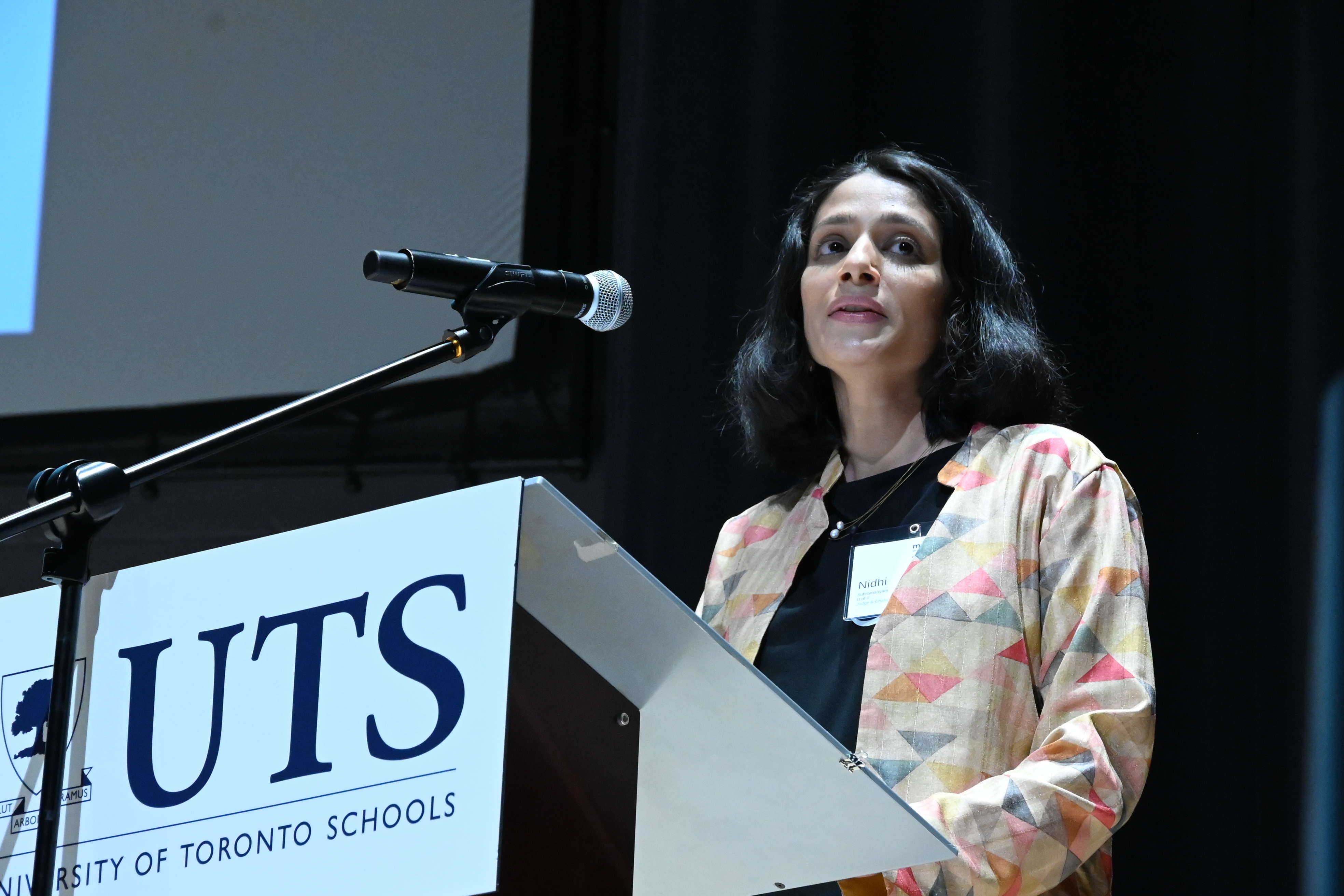
Challenge Expert Dr. Nidhi Subramanyam, assistant professor of geography and planning at the University of Toronto.
Throughout the process, they were guided by Challenge Expert Dr. Nidhi Subramanyam, assistant professor of geography and planning at the University of Toronto, who spoke as the keynote at the launch in October and the Final Symposium in April, held at UTS.
“Improving water access is complicated because disasters, global warming, wars and geopolitics continue to reduce water availability in many parts of the world,” she told the Symposium. “I can't help but mention the energy crisis triggered by the U.S.-Iran war. As fuel becomes increasingly scarce and expensive, we can reasonably speculate that it's going to become difficult to manufacture bottled filter and purify bottled water, and to transport bottled or untreated water, given that water still continues to be delivered by water trucks, tankers and scooters in many low- and middle-income countries across the world now.”
While popular decentralized solutions like rainwater harvesting, water filters and kiosks powered by renewable sources exist, they are far from perfect, she said, describing them as a “mere band-aid” if they don’t address environmental racism, housing insecurity, gender-based inequalities or conflicts between regions and countries. “The real challenge is to think of responses to water availability that engage with these social and political dimensions underlying unequal and inadequate water access, rather than simply proposing technological or economical solutions.”
Solutions should enhance the capabilities and freedoms of the people they aim to help, she said, particularly women and girls from indigenous and low-income communities who have been deprived of water access and marginalized in water governance.
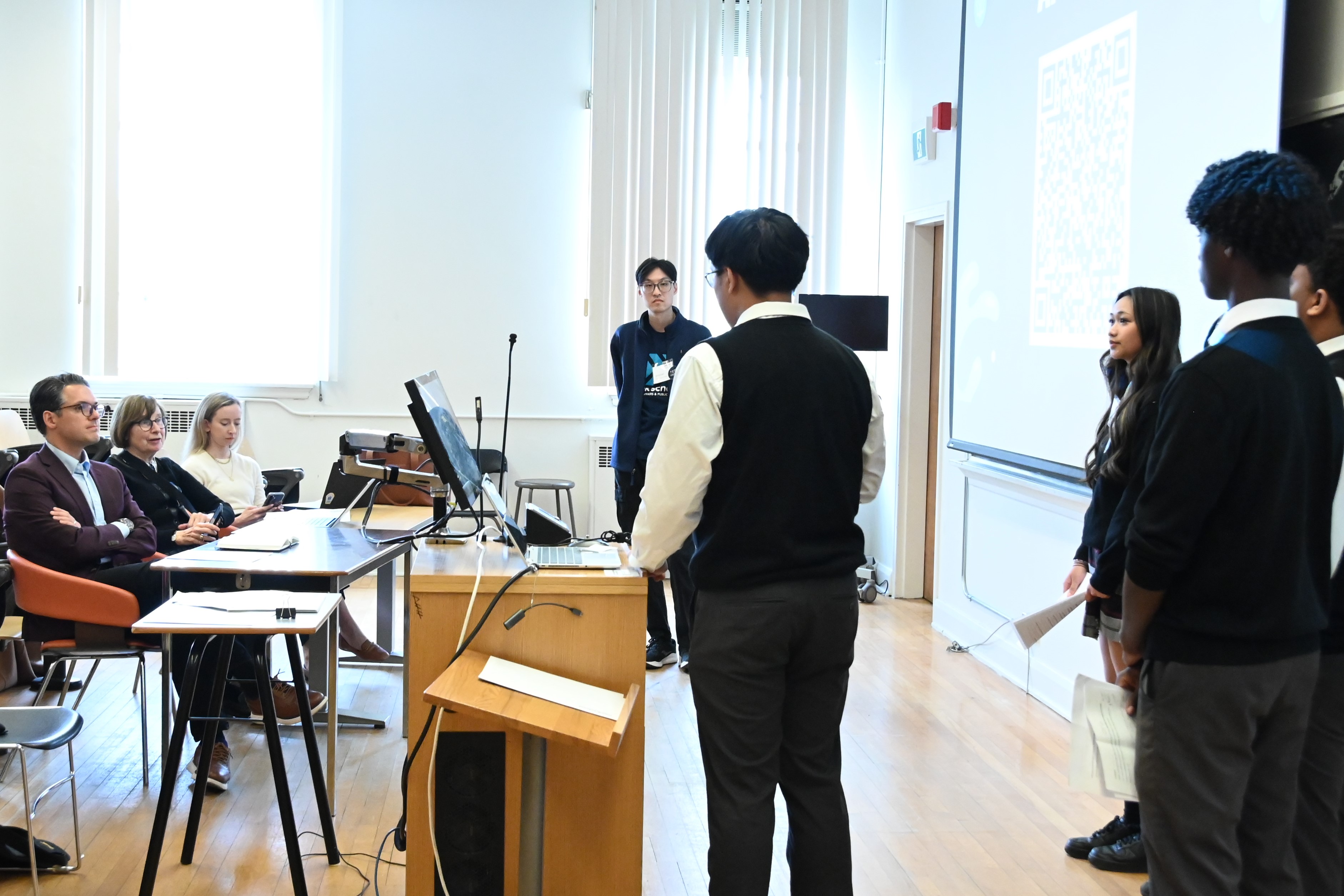
The student team from St. Patrick Catholic Secondary School in Toronto fields questions from the expert panel.
The student team from St. Patrick Catholic Secondary School in Toronto ‒ Meagan, Chizzy, Divine, Nixson, Ydidia and Matthew ‒ sought to find clean water accessibility solutions for the Athabasca Chipewyan First Nation in Northern Alberta. “The main issue here is due to the oil sands operations in the area. There are toxic chemicals from industrial runoff and tailing ponds that seep into freshwater sources like the Athabasca River, which is their main source of water. Toxic chemicals like heavy metals such as cadmium, selenium, mercury, and also orbital compounds like positive hydrocarbons contaminate their water and overall livelihood, posing a triple threat to their health, economy and culture as a whole,” said the students in their presentation.
They interviewed experts to learn more about the area, developing a two-pronged solution to implement water filtration systems that serve the unique environment of the First Nation, accompanied by capping chemical contaminants produced by oil sands operators.
“This program was really an eye-opening experience,” said Ydidia. “It made me realize I had this notion that I assumed other people would do things like this and I couldn't really do anything personally to combat issues like this. But after this, I realized that if you put in the effort and collaborate with other people, you can achieve things.”
After their presentation, they handled questions from a three-member expert panel, which included former UTS principal Rosemary Evans, as well as questions and discussion from other participants.
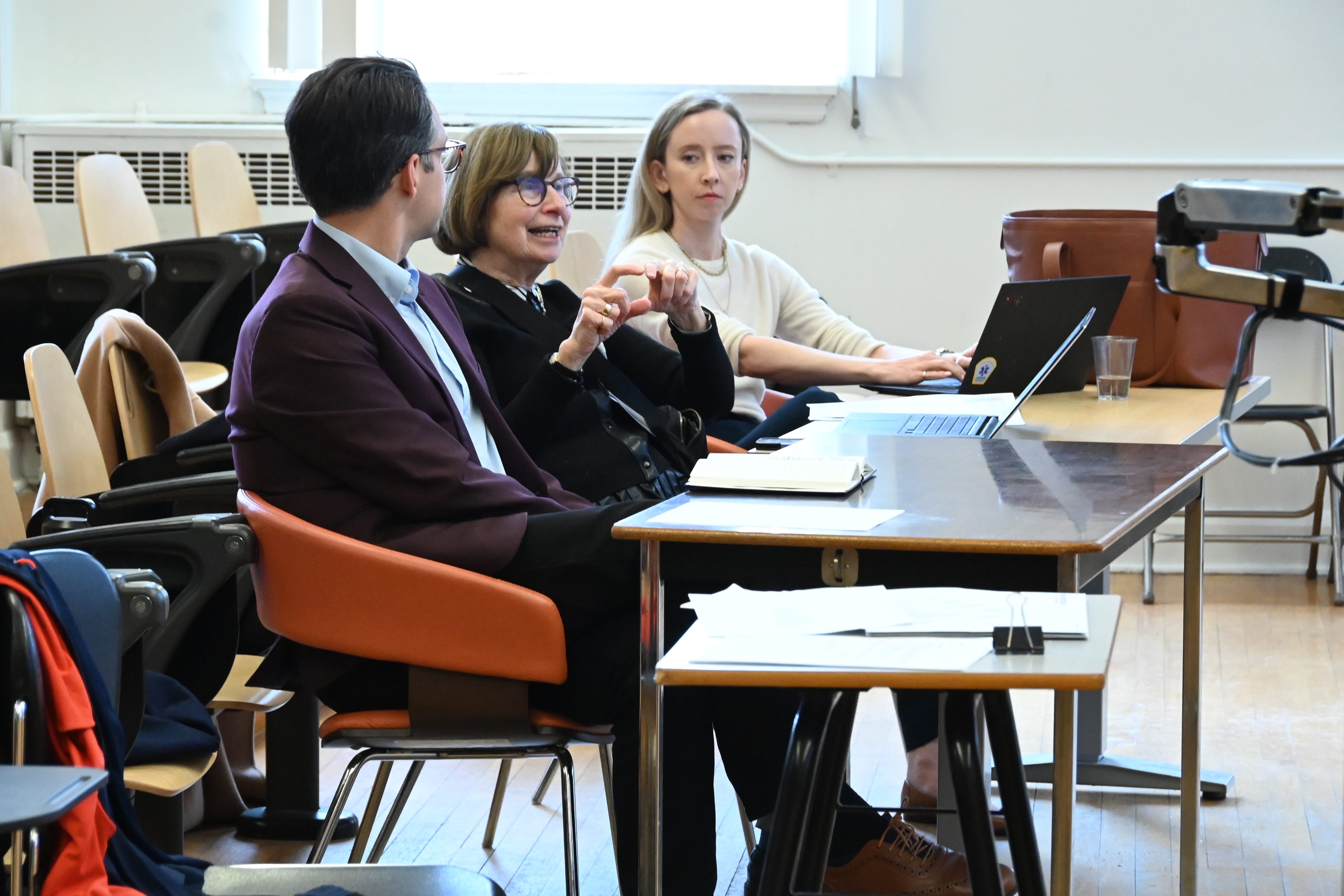
One of the three-member expert panels, featuring Dylan Marando, a candidate for the Ontario Liberal Party leadership race, former UTS principal Rosemary Evans and Mary Milner, a Munk School alum and director of partnerships and projects at Nutrition International, an international non-profit organization.
“The learning opportunities for students at the Global Ideas Institute are amazing, because all of them are presented with the same problem, but they come up with different solutions that are all across the world,” said St. Patrick’s Department Head of Guidance Susan Kacala-Blinco, who supervised the team with Maria Fehr, Department Head of Science “It’s an important learning model and an important lesson.”
The UTS student team ‒ S5s (grade 11s) Catherine, Eriko, Katerina, Rhiya, Xuezhen and Alexandra ‒ focused on remote Alaskan Indigenous communities where water can cost US$50 for 1,000 gallons, far above the average price in America, and where Typhoon Halong damage in October 2025 contaminated floodwater with oil, and where people have to haul water themselves from the treatment plant.
Their solution: Local Infrastructure and Network for Knowledge (LINK) Kits that make it easy for communities and people to test the water themselves, while connecting them with support to address water quality issues. The kits are low cost at about $5 each, and contain testing strips for nitrate, copper, chlorine, pH balance and also Secchi discs to measure the water turbidity. They also include a water check card that advises when test results indicate action is necessary and which local governments or organizations to contact.
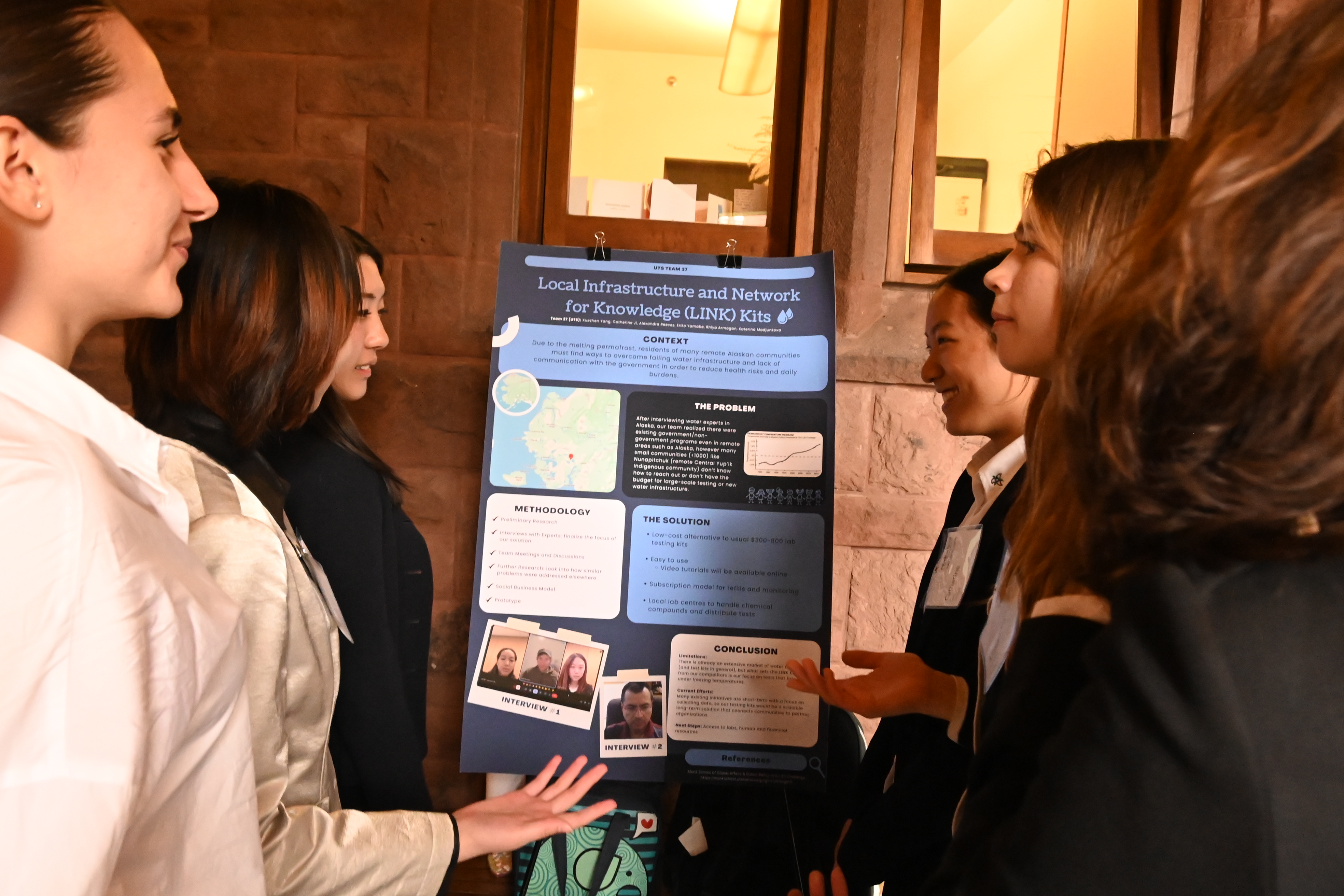
The UTS student team discusses their idea for Local Infrastructure and Network for Knowledge (LINK) Kits at the noon-hour poster session.
“During our interviews, we found a lot of communities are unwilling to reach out to governments…” said Xuezhen, during the noon-hour poster session, where students shared posters outlining their solutions. “We want to raise awareness to communities that they can conduct the test themselves to see if there are contaminants in their water, which might make them more willing to reach out to access public services.”
Along their water issues learning journey, students deepened their understanding with monthly lectures led by U of T experts such as Dr. Mohammed Basheer, assistant professor in the department of civil engineering and mineral engineering at the University of Toronto and an expert on hydrology and hydropower.
“The water cycle is changing,” he told participants at the December session. “Climate change is resulting in changes in the volumes and timing of rainfall around the world, which is going to result in different kind of amounts of rainfall that we haven't seen in some parts of the world. Then there's the other side of problems related to water. Droughts, when we don't have a lot of water, are a silent killer.”
Adjunct Professor Ray Cantwell spoke about water systems and sanitation at one of the monthly lectures. U of T electrical and computer engineering student Diana Virgovicova, who was named to the Forbes 30 under 30 list, shared how she uses artificial intelligence and quantum chemistry to enable clean water solutions at her start-up, Xatoms. Dr. Yu Chen, an assistant professor in the department of physical and environmental sciences, discussed the important of working closely with communities when implementing complex water solutions. Paromita Nakshi, a PhD candidate at the department of geology and planning, who won U of T’s five-minute thesis competition in 2025, shared her tips on developing a clear and compelling presentation.
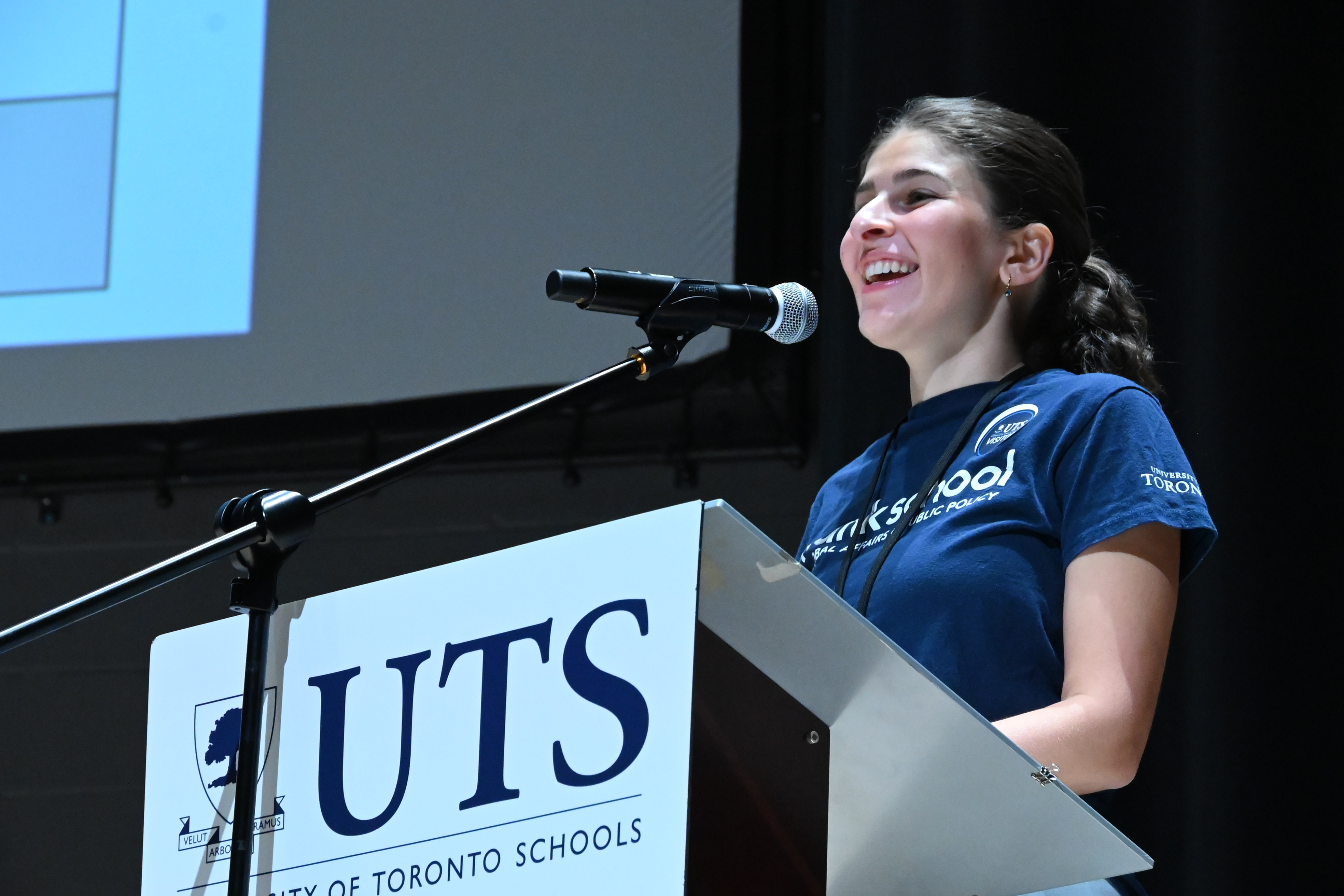
Global Ideas Institute Director Samaa Kazerouni Shah ’14.
Each student team worked with two of nearly 80 university student volunteer mentors from the Munk School of Global Affairs and Public Policy. Master’s candidate Shazma Nafis serves as the Institute’s Research Coordinator, compiling background research for the students to review before each of the speaker sessions.
Shazma mentored students from Toronto French School, who created a solar-powered, water ATM machine to serve indigenous communities in Chiapas, Mexico, that would harvest water from nearby lakes, use solar energy to purify the water and pipe it to ATM machines throughout Chiapas, where communities and families can collect it.
“Our main goal for their solution was for it to be as localized as possible,” said Shazma. “We really reiterated the fact that solutions look different everywhere, and you can't really apply a one-size-fits-all solution, especially for an issue like water access.”
At the end of the Symposium, Institute Director Samaa Kazerouni Shah ’14, also a UTS alum, congratulated participants for their courage, creativity and dedication.
“We saw solutions grounded in research, empathy and imagination,” she said. “We saw teens challenge assumptions, rethink systems and centre the voices of those most affected by the problem…. We need individuals like you to keep challenging the systems, pushing forward and imagining new ideas. You showed us the beginnings of what a future could look like that we will really be so proud of.”
Note: at UTS the Global Ideas Institute Program is overseen by Richard Cook, the UTS Global Citizenship Program Coordinator.
#UTSStories


.jpeg&command_2=resize&height_2=85 "UTS students compete on Dragon’s Den, speak at the UN and launch a video editing business")


_00_01_55_04_Still002(1).jpg&command_2=resize&height_2=85 "The sound of hope and renewal: National Day for Truth and Reconciliation Assembly")
.jpg&command_2=resize&height_2=85 "A Day of Joy and Learning: Day of Pink")


.png&command_2=resize&height_2=85 "Co-designed research takes UTS students to AERA 2023 in Chicago")