- Home
- About UTS
- Admissions
- The UTS Difference
- Support UTS
- UTS Community
- Stories
- Contact
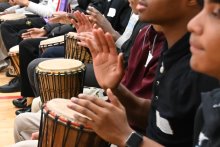
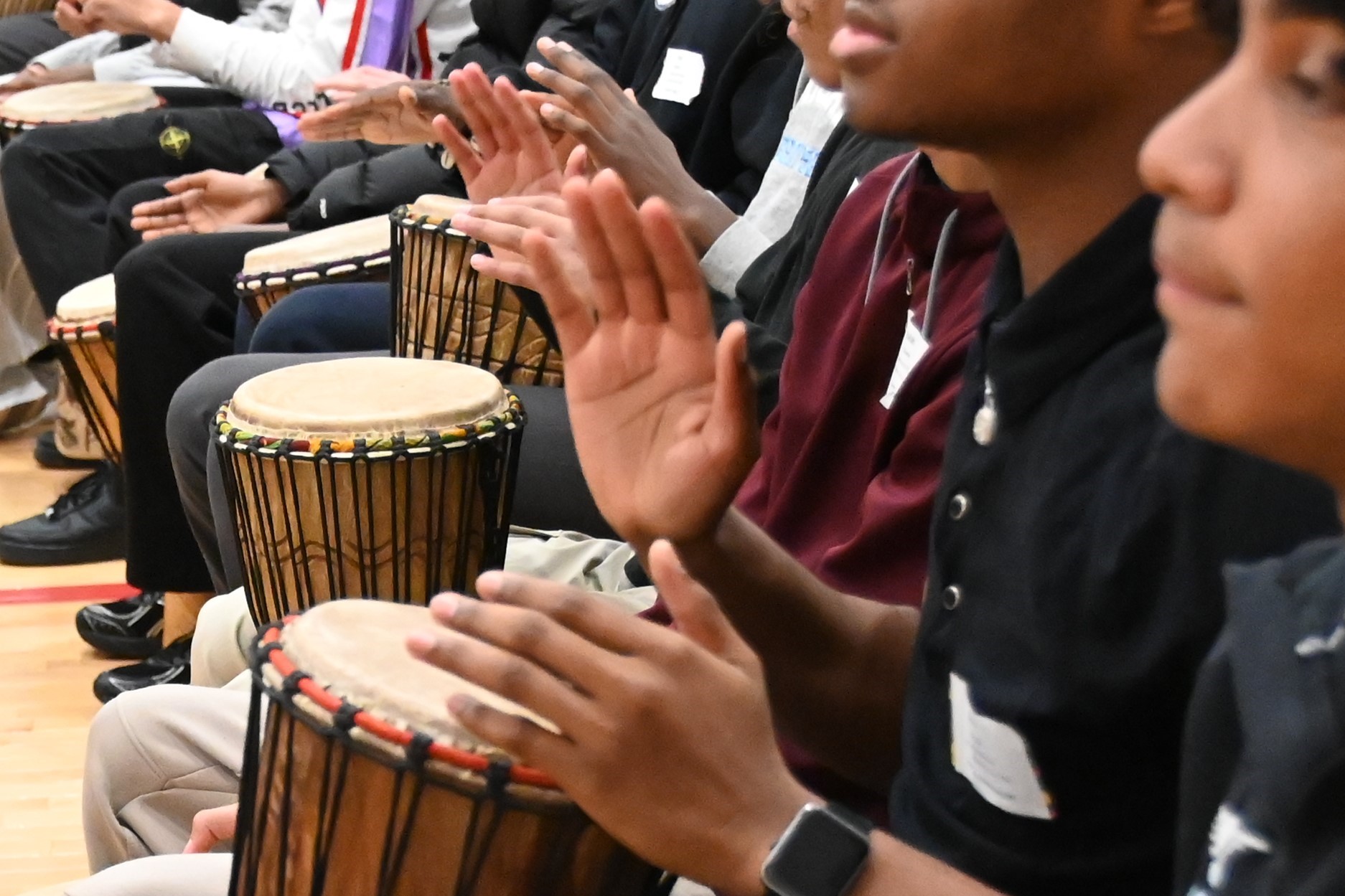
The powerful sound of African drumming filled the McIntyre Gymnasium at UTS, as a group of 35 Black and Black-identifying students from across the Greater Toronto Area and beyond came together in a circle to create a powerful rhythm, guided by guest facilitator Barbarinde “Baba” Williams, founder of the organization Drums et al.
More than just drumming, playing together is an expression of interconnection. Barbarinde uses the African word, Ubuntu, which means humanity. Bayview Glen grade 8 student Anita, who was part of the circle, described it like this: “Even though we knew these people for only 10 minutes, in the drumming circle it felt like we knew each other forever, because we were all together in a community.”
This was one of many transformative learning experiences at the 4th Annual Brilliancy and Resiliency Conference, for Black and Black-identifying students from grades 7 to 12 who are members of the inter-school Black Students Affinity Network. a member-led initiative shared within the Conference of Independent Schools of Ontario community.
“I'm at a school with not many Black people, and only two in my grade,” said Anita. “I’m the only Black girl. This conference shows me that I'm not alone.”
This April, more students than ever before ‒ 166 students from 23 schools across the Greater Toronto Area and beyond ‒ attended the Conference, which had the theme, Roots: Belonging as Black Canadians, Embracing Culture. Organized by UTS staff and students on the Black Equity Committee, with the support of Nasreen Khan, UTS head of anti-racism, equity, diversity and inclusion and outreach, the Conference engaged 15 community partner organizations. For the first time, participants came from out of province, with eight students and two teachers attending from St. John's-Ravenscourt School in Winnipeg, Man.
The day began in the Withrow Auditorium, with an introduction by the executive of the UTS Black Equity Committee. “While the Black experience is often presented as very monolithic, there is a wide range of languages, clothing, food and dance, all belonging to the wider Black diaspora,” said UTS S6 (grade 12) student Diara. “Especially in Canada, where our roots are spread across the entire globe, no two identities are the same, and today, we hope to explore our differences to bring us closer together.”
The introduction ended with everyone raising their voices in a chorus of ‘Lift Every Voice and Sing,’ called the Black National Anthem, led by the UTS Black Equity Committee.
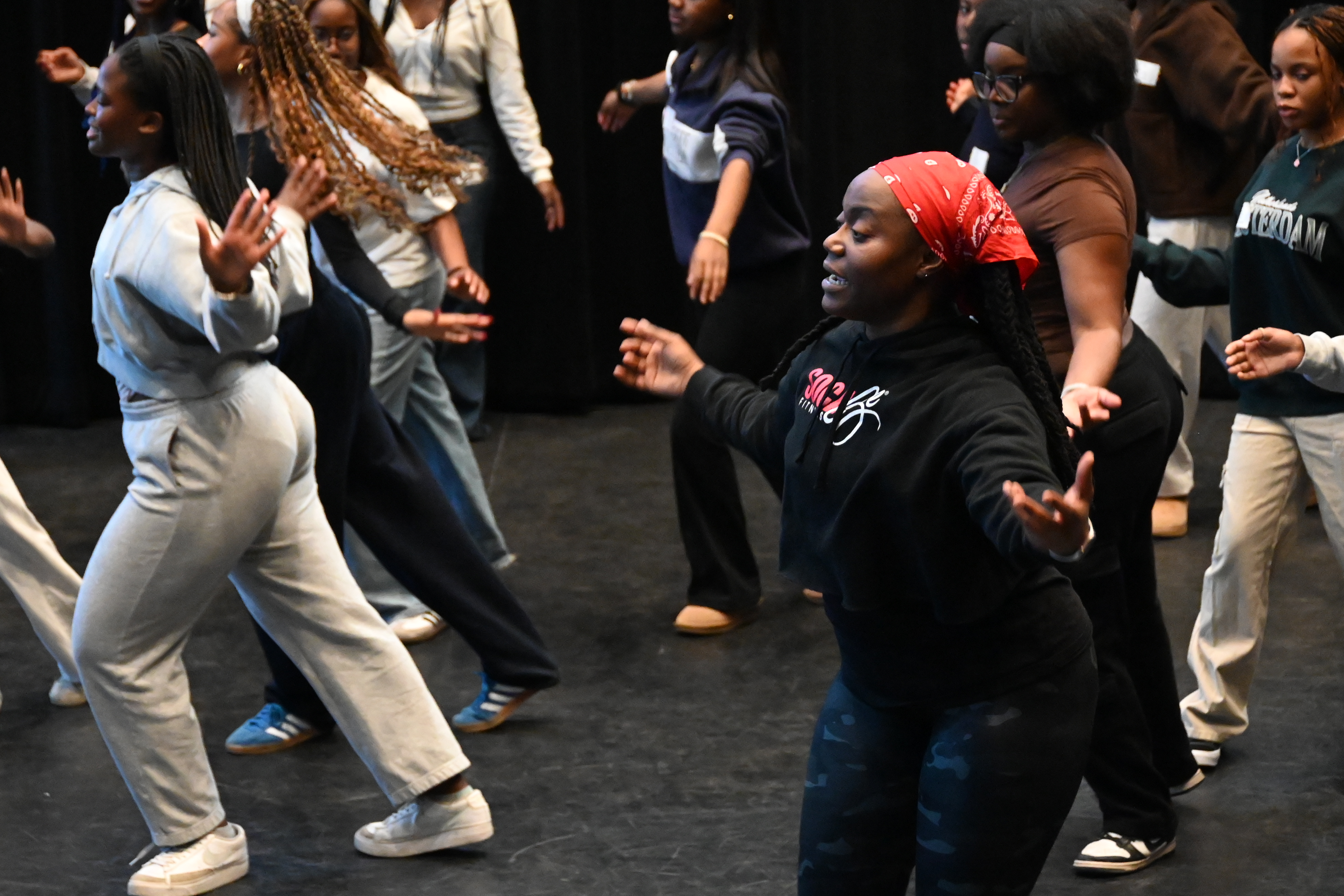
In the morning and afternoon, participants chose from seven different cultural and artistic workshops led by Black community artists and leaders. In Socacize, taught by Ayanna Lee-Rivears at Socacize Fitness, participants experienced Caribbean dance traditions firsthand, moving in unison to the beat.
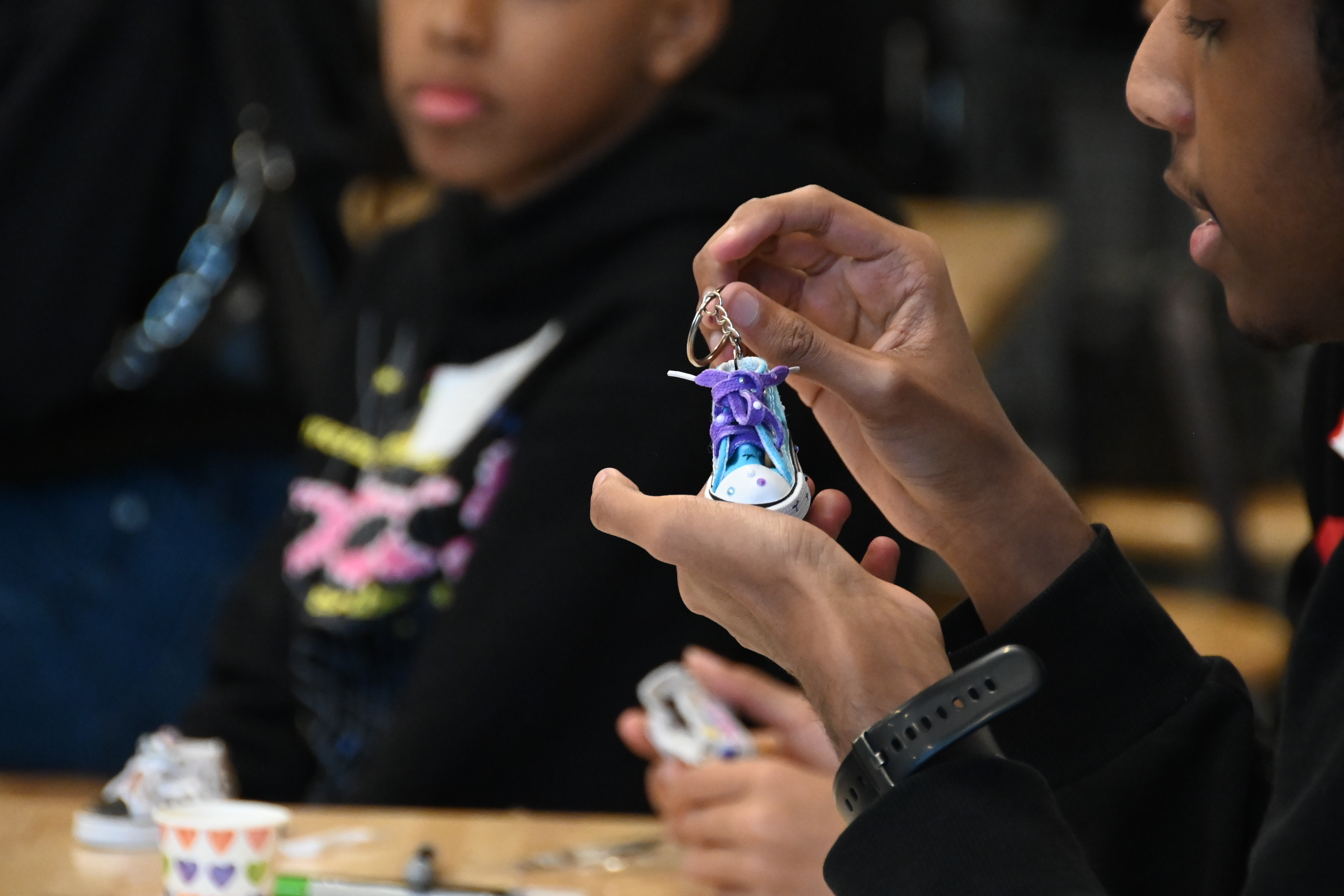
Nadine Brown-Stoddart, founder of HER Collective Agency, with decades of experience in sneakers and marketing, led a workshop on sneaker culture, where students learned about the impact of Black music like hip hop and Black athletes on sneaker culture, and each decorated a small sneaker to either tell a personal story, or share a message.
UTS F2 (grade 8) student Alyna, said, “I made a white shoe with blue flames and blue sole, because blue is the hottest form of fire. Underneath, I put diamonds, because they're the hardest substance, to symbolize the idea of perseverance, even when things can get really intense.”
In our Lang Innovation Lab, students learned by doing in a workshop about African headwrapping and sustainable materials, led by Naverne Nash-Longshaw, the founder of Château Neuf, a sustainable and slow wear brand creating luxury fashionable accessories.
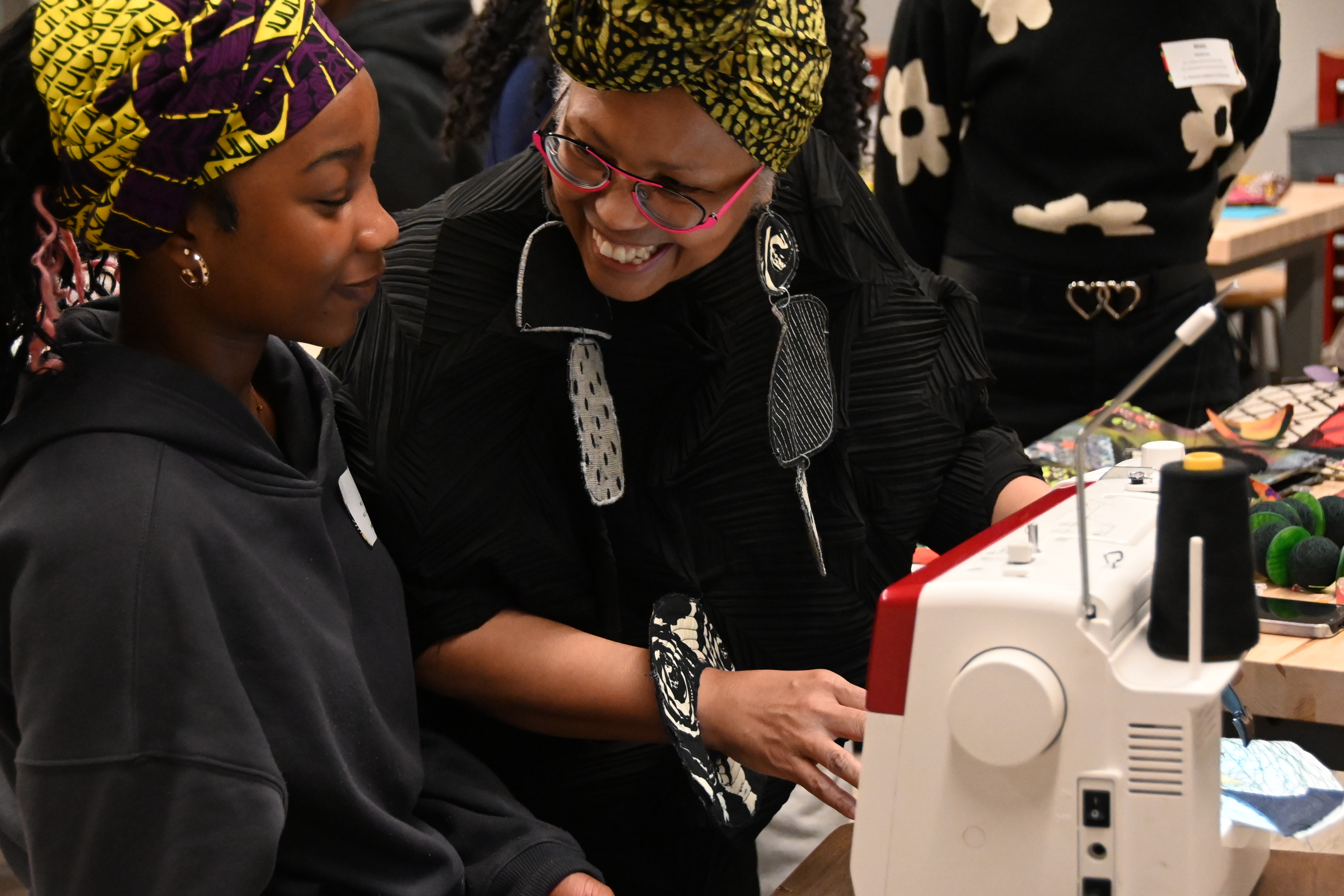
There were also workshops on BandLab, culinary explorations and culture on canvas, all led by Black community leaders.
For many years, a conference like this was just a dream. Founder Dr. Daniel Lumsden, a community engagement and learning lead and co-head of the Geography, Economics, and Accounting department at St. Michael’s College School, recalled, “During the COVID pandemic, we had a Black teachers meet up via Zoom. We'd always talked about having a Black student conference. The idea came to fruition. It was time.”
The first conference took place in 2023 at St. Michael’s College School, which hosted it for two years before UTS hosted it in 2025 and 2026. Next year, St. Clements School will host the event.
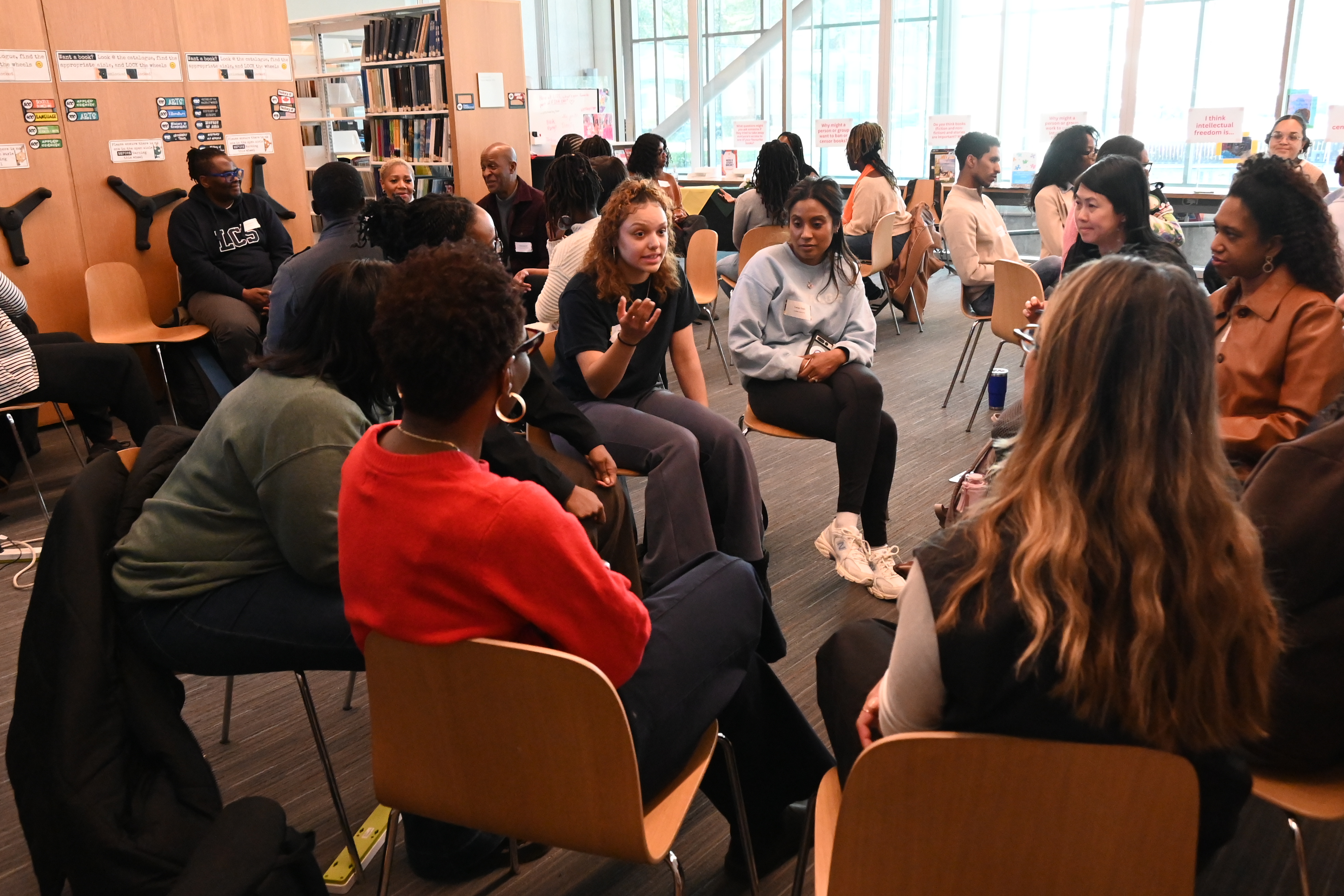
The conference also provided learning activities for staff, including peer learning and a conversation with Dr. Carl James, the Jean Augustine chair in education, community and diaspora in the Faculty of Education at York University where he is also the equity advisor to the dean. Aparna Singhal, the junior school principal at St. Mildred’s-Lightbourn School, said one of the things they discussed was how much of the Black history they learned came not from their time in school, but on their own initiative as adults, and how they don’t want to perpetuate that for young Black people now. “I brought eight students here today, and most of them have never had a Black educator. For them to be inspired today by seeing so many Black educators and taking workshops with Black leaders, and to feel that energy, was really beautiful.”
The day wrapped up in the Withrow Auditorium with a candid father-son keynote, featuring the Honourable Justice Donald McLeod, who co-founded the 100 Strong Foundation to support Black male youth, and Caleb McLeod, a U of T philosophy student who is entering law school next year.
Justice McLeod, who was appointed to the Ontario Court of Justice in 2014, told students that being Black is a superpower and encouraged students to be strong in spaces where they might not think they can be strong. “You are rooted in something that is amazing. It defies words. You should be proud of who you are. Even if there's nobody else in that room but you who is Black, you are representative of who you are. But Blackness also means that you don't have to assimilate.”
Justice McLeod asked the audience: “Are there any staff or students here that have been impacted in a negative way with racist incidents or moments?” A show of hands went up and he estimated that nearly 80 percent of participants raised their hands. “That’s a significant number. We are sorry that this had to happen to some of you as students, and we know that it's so pervasive that it's something that we have to look out for.”
He urged the students to keep themselves strongly rooted in their Black identity. “Sometimes it's a tug of war between who you are and who they expect you to be.”
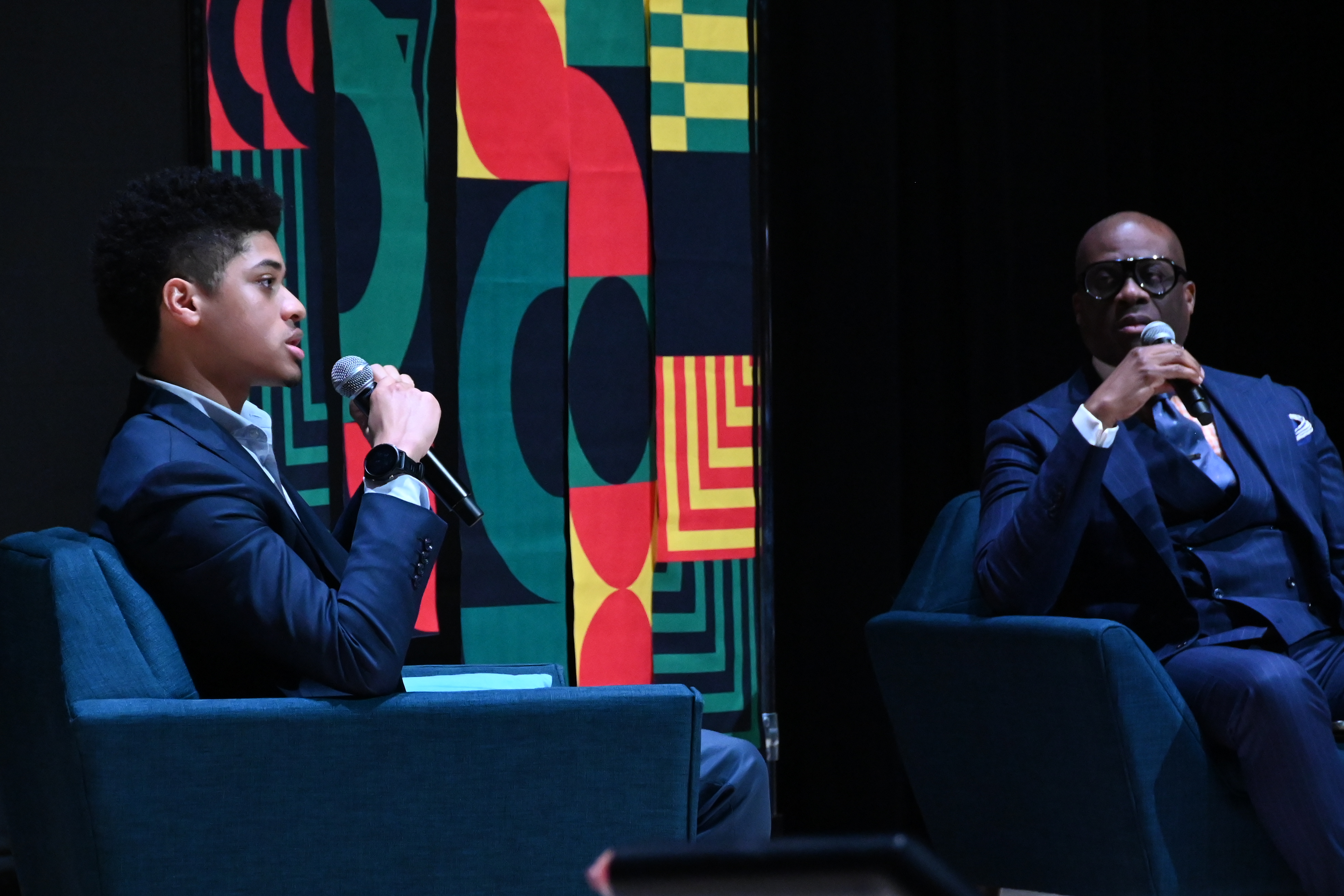
Caleb shared some of the assumptions people made about him during his independent school education. “I was the first ever Black head boy at my junior school and at times, people would assume that I'm a prefect, as opposed to being the head boy… that's a message that maybe a lot of you guys can resonate with. There may be assumptions made about you in the way that you carry yourself, the things you talk about.”
At his independent high school, there were eight other Black male students in his grade and they worked together to navigate the tropes and assumptions, but he didn’t always feel understood as a person. “When I arrived at the University of Toronto, I sat down in classrooms with people who look nothing like me and not only that but they’re from everywhere in the world. I realized I feel more understood in this space than anywhere else, because when I was in that space, people just saw me as me, and my race was something secondary.”
Conversations like this make him hopeful, he told the audience. “Keep unpacking how you feel about this, about how to belong. This also means that you have to know who you are. That's a process that is hard to do, but just take it all in stride. The good news is that there are more conversations, initiatives and groups like this happening, and more spaces to have these conversations.”
UTS Guidance Counsellor Ronell Matthews, one of the staff organizers, wrapped up the day with this message: “Students, this day is for you. We want you to know that we see you, we value you, we care deeply about who you are and who you're becoming in a world that actively works to diminish your existence. Please remember your worth. Please remember that you are infinitely capable and that you belong.”
Comments from attendees
“This is important because it allows us to be more connected to our culture together, rather than individually, and it helps Black students learn more about their cultures, and keep the culture alive.
- Fiyinfoluwa, Grade 11 Trafalgar Castle
“It was nice to meet new people, especially because we go to Appleby in Oakville, so there's a smaller community of Black students there. In my second workshop, I got to talk to some people from UTS and also from Crescent and UCC. So it was nice to talk to people from larger areas and get to know them.”
- Grade 12 Keno, Appleby College
“[Events like these] make you feel more comfortable, because they're obviously our people, so it's more of a sense of comfort.”
- Grade 11 Crystal, Appleby College
“In Oakville, there's a smaller community of Black students, especially at our school. So it's nice to talk to other people and see what their experiences are like. With people in my second workshop, we had a lot in common. In our first workshop, we met new people who were from the same place as us, so it was cool to see that.”
- Grade 11 Ariel, Appleby College
“This event makes me feel proud about how close we are, and how we can be from any Black culture, but still stick together.”
- Grade 8 Arabella, Trafalgar Castle School
“I feel like it was really nice to get all the different Black cultures like African, Caribbean and other parts of Black cultures and learn more about them all in one place. I did Socacize for my first workshop, and then drumming for my second workshop. It was really nice to get both the Caribbean and the African sides, seeing the similarities and how intertwined they are, and how Black culture is not just African and Caribbean, but also West Indian.”
- Grade 11 Izebuwa, Trafalgar Castle School
#UTSStories


_00_01_55_04_Still002(1).jpg&command_2=resize&height_2=85 "The sound of hope and renewal: National Day for Truth and Reconciliation Assembly")
.jpg&command_2=resize&height_2=85 "A Day of Joy and Learning: Day of Pink")



.png&command_2=resize&height_2=85 "Co-designed research takes UTS students to AERA 2023 in Chicago")